Cursor Now Has a Model
On June 16 SpaceX filed an 8-K announcing an all-stock acquisition of Anysphere, the company that operates Cursor, at a $60 billion equity value, exercising an option it had secured in April days after its own record $75 billion IPO. Cursor was the model-neutral code editor: 1 million daily developers routed the same prompt to Claude Opus, GPT-5.5, Gemini 3 Pro, Grok, or Cursor's own Composer, and the entire reason a venture-scale dev-tool existed was that the routing layer had no parent that owned a model. It has one now. SpaceX owns xAI, whose coding-tuned Grok V9-Medium trained on Cursor workflow data and shipped the same week, so whether the picker keeps its default-neutral posture is now a corporate-strategy decision inside SpaceX. A SpaceX subsidiary also inherits a parent under continuous federal export-licensing review, the same mechanism that took Claude Fable 5 and Mythos 5 offline in 24 hours. Model-neutral tooling is a phase, not a sector. The takeaway for anyone standardized on Cursor: have a neutrality-positioned alternative installed before the defaults change, not during.
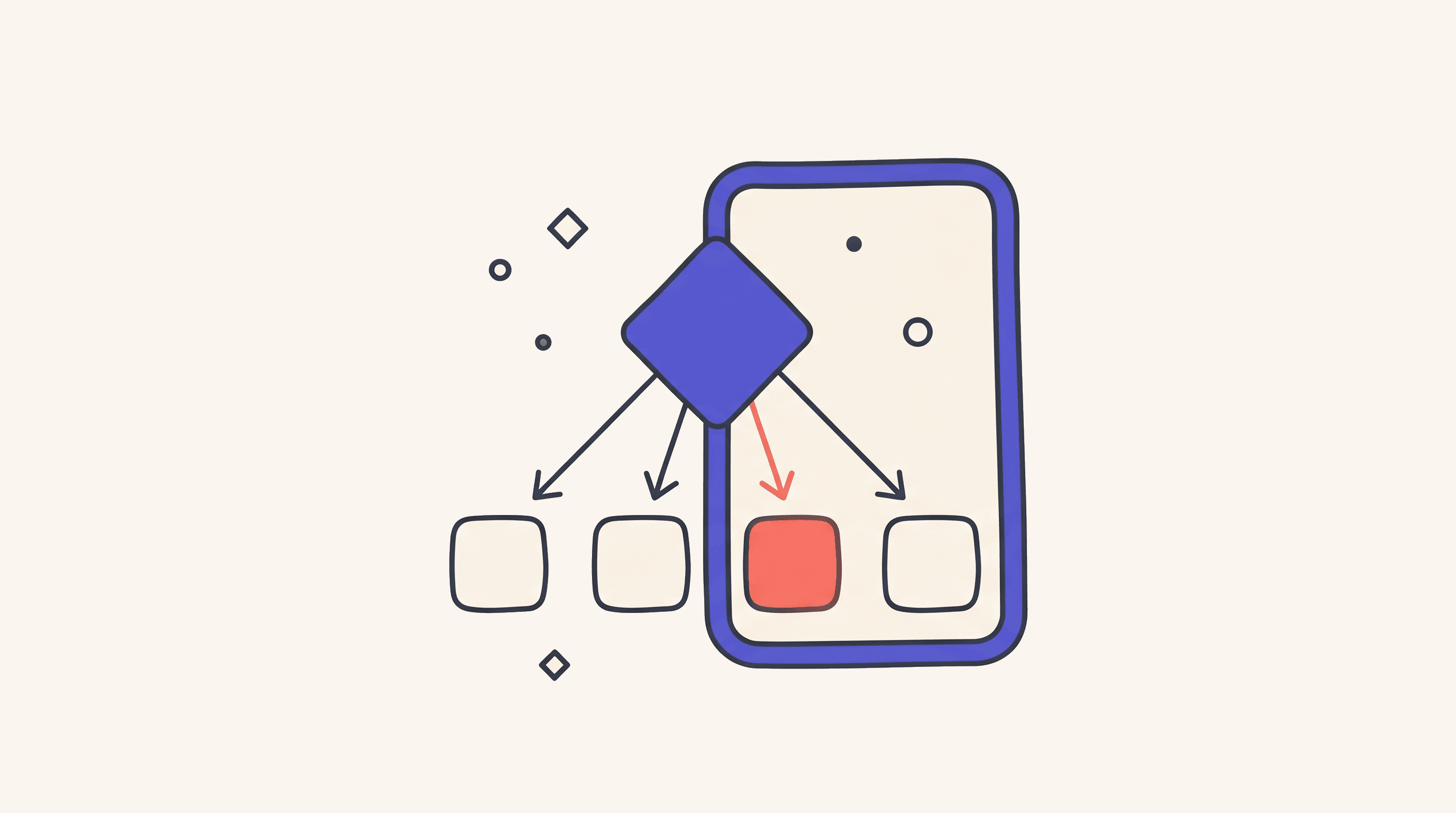
SpaceX filed an 8-K with the SEC on June 16 announcing the all-stock acquisition of Anysphere, the company that operates Cursor, at a $60 billion equity value. The deal exercises an option SpaceX secured in April, a $60 billion right to acquire Cursor with a $10 billion break-up fee if the deal fell through. SpaceX IPO'd on June 12, raising about $75 billion at roughly a $1.8 trillion valuation. Cursor shareholders receive SpaceX Class A common stock, unregistered under Section 4(a)(2). Expected close, Q3 2026.
Cursor was the model-neutral code editor. Inside the picker, developers could route the same prompt to Claude Opus, GPT-5.5, Gemini 3 Pro, Grok, or Cursor's own Composer, pick whichever won on the task, and swap models without changing the workflow. By March, Cursor had crossed 1 million daily active users, about 50,000 enterprise customers, and roughly $2 billion in annualized revenue. The product Cursor sold was that the routing layer didn't have a parent with a model. The reason a venture-scale dev-tool company existed at all was that no model lab had owned the editor layer.
What SpaceX exercised on June 16 wasn't an opportunistic acquisition. It was an option from April with two strike prices: $60 billion to take the company, $10 billion if the deal fell through. SpaceX picked the higher one. The structure means that by April, before SpaceX's IPO and before Cursor's most recent revenue inflection, both sides had aligned on a path that put Cursor inside SpaceX by Q3. The dev tool that ran a model-neutral router was always a contingent independent dev tool. The contingency resolved.
SpaceX's vertical-integration framing makes the routing question concrete. The stack runs from Starlink-adjacent compute through xAI's models to the code editor 1 million daily developers actually use. xAI publicly stated in late May that it had finished training Grok V9-Medium, a coding-tuned model built on Cursor developer workflow data, with public release expected in mid-June. The model and the acquisition arrived together. Whether the Cursor picker keeps its current default-neutral posture next year, or starts weighting Grok V9-Medium at the top because the parent owns it, is a corporate-strategy decision inside SpaceX now.
The federal-contractor surface is the part procurement hasn't priced. SpaceX holds primary federal contracts with the Department of Defense, the State Department, and NASA. The export-control mechanism that took Claude Fable 5 and Mythos 5 offline within 24 hours of a Commerce letter on June 12 applies to any US software exporter, but a SpaceX subsidiary inherits a parent whose entire launch business operates under continuous export-licensing review. The parent's incentive to comply quickly with any Commerce directive is structural, and an independent Cursor wouldn't have had the same upside. Cursor as Anysphere sat outside that compliance posture; as a SpaceX subsidiary, it sits inside it.
The steelman is real. SpaceX needed application distribution because xAI's coding tools had limited footprint inside the dev-tools market. Cursor's user base is the single largest frontier-class developer surface not already locked into a model lab's code editor. Anysphere needed an exit path the public market wasn't otherwise going to clear at $60 billion. SpaceX's IPO last week created the deal currency, and the pre-arranged April option locked the price at predictable terms regardless of close-day conditions. The two companies fit. None of that changes the fact that the routing-layer neutrality 1 million daily users picked the tool for now reports to a parent that owns one of the routes.
Model-neutral tooling is a phase, not a sector. Cursor was the company that proved a venture-scale dev-tool could exist on the promise of letting developers pick the model, and the proof completed when the company that built it became valuable enough for a model-owning parent to acquire. Continue.dev, Zed, and Aider inherit the neutrality slot for the next venture-funding round. The round that gets one of them to scale will end the same way.
What to Do With This
If you're an individual developer on Cursor Pro, install Continue.dev or Zed this month and run it on one project. You don't need to switch. You need a working alternative ready for the day the picker's defaults change in a way you don't like.
If you lead a dev team standardized on Cursor, schedule a dual-tool eval this quarter against one neutrality-positioned alternative (Continue.dev, Zed, or Aider) and one vendor-owned editor (Claude Code or Codex). Don't switch yet. The decision you'll face in Q4 is faster if the parallel install is already there.
If you're on Cursor enterprise terms, pull the contract and check the change-of-control clause, the language that lets either party assign the contract on acquisition without your consent. Add change-of-control to the procurement template for every AI dev tool on a renewal cycle.
Want More Than This Newsletter?
Alcreon publishes a daily AI briefing, long-form dossiers, and an analysis feed for the teams actually shipping AI in production. This newsletter is one read out of the full library.
Read the daily feed or browse the editorials.
Also on the Radar
OpenAI Launches a $150M Partner Network With Big Four Consulting
OpenAI opened its first formal partner program on June 16 with a $150 million investment and a target of 300,000 certified consultants by year-end. Launch partners include Accenture, BCG, Bain, McKinsey, and PwC, with three tiers (Select, Advanced, Elite) and specializations in Codex, cybersecurity, and agents. Enterprise procurement that has been buying AI through internal pilots now has a Big-Four channel to buy implementation. The vendor that gets the certified consulting bench wins the late-2026 enterprise rollout.
Anthropic Opens Seoul Office With Samsung, LG, and Hanwha Deployments
Anthropic opened its Seoul office on June 17, the lab's third in Asia-Pacific behind Tokyo and Bengaluru. LG CNS will deploy Claude to thousands of LG Group staff, Samsung SDS will run Claude across Samsung Electronics, and Hanwha Solutions will route Claude through AWS Bedrock to keep data resident in-region. The opening landed five days after the Commerce takedown of Fable and Mythos. The geographic-hedge play is on the record.
Share
Read Next
See all
Echo
The Model Wasn't the Headline
Anthropic shipped Claude Tag and OpenAI expanded Daybreak in the same week, and in both the product was a workflow install, not a new model.

Echo
Where the Architects Went
Noam Shazeer left Google for OpenAI and John Jumper for Anthropic in one week, a senior-hire signal that previews lab capability before the leaderboards do.
Echo
Nine Minutes, No Humans
What took a human team six hours, Anthropic's Opus 4.7 did alone in a robotics test.